
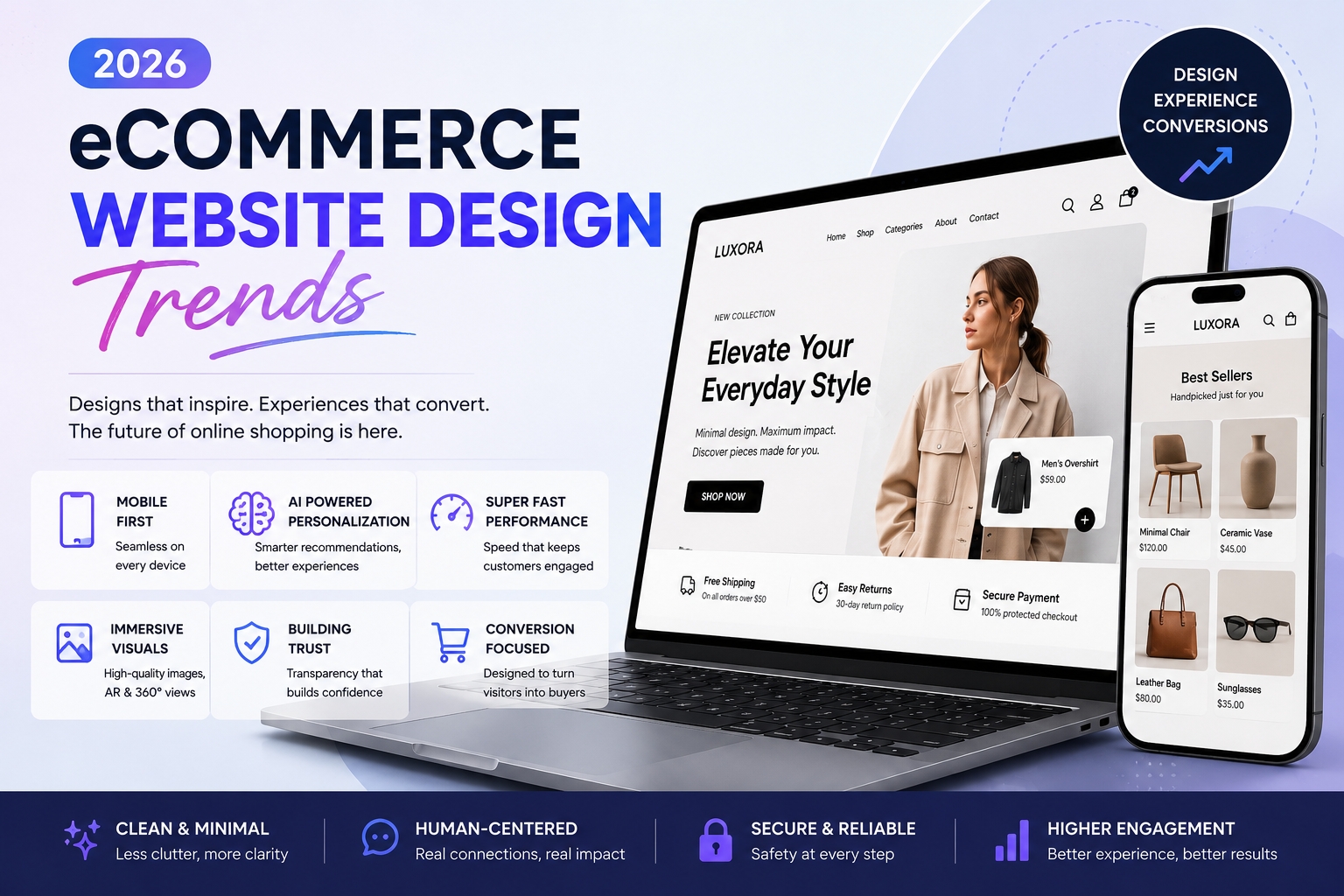
The eCommerce industry is evolving faster than ever, and in 2026, design is no longer just about aesthetics. Modern online stores are being built around speed, personalization, trust, and user experience. Businesses that ignore these changes are already falling behind.
Today’s customers expect more than just a functional website. They want smooth navigation, fast-loading pages, intelligent recommendations, and a shopping experience that feels effortless from start to finish. That’s why understanding the latest eCommerce Website Design Trends is becoming essential for brands that want to stay competitive in the U.S. market.
The reality is simple: a well-designed store increases trust, improves engagement, and directly impacts conversions. As customer expectations continue to rise, brands are shifting toward cleaner layouts, AI-driven experiences, mobile-first structures, and performance-focused design strategies.
Why eCommerce Website Design Matters More in 2026
Consumers make decisions quickly.
The moment someone lands on your website, they instantly judge:
- Your credibility
- Product quality
- Brand trustworthiness
- Overall professionalism
If the experience feels outdated, cluttered, or confusing, users leave without hesitation.
Modern eCommerce Website Design Trends focus heavily on reducing friction. The goal is not just to make websites visually appealing but to create experiences that guide users naturally toward conversion. Research and industry reports continue to show that speed, usability, and personalization are among the biggest drivers of online sales in 2026.
1. Mobile-First Design Is No Longer Optional
Mobile commerce continues to dominate online shopping behavior.
Most users now browse and shop directly from smartphones, which means businesses can no longer treat mobile optimization as an afterthought. A website that works perfectly on desktop but feels awkward on mobile creates frustration instantly.
Modern stores are prioritizing:
- Thumb-friendly navigation
- Simplified layouts
- Faster mobile loading speeds
- Mobile-first checkout experiences
Brands that focus on mobile usability are seeing better engagement and higher conversion rates.
2. AI-Powered Personalization Is Changing User Experience
Artificial intelligence is becoming one of the biggest forces behind modern eCommerce experiences.
Instead of showing every visitor the same content, websites are now adapting dynamically based on:
- Browsing behavior
- Purchase history
- User interests
- Shopping patterns
AI-driven recommendations, personalized product suggestions, and intelligent search experiences are making online stores feel more relevant and intuitive. Many brands are using these strategies to improve customer retention and increase conversions.
3. Minimalist Design Is Winning Again
One major shift in current eCommerce Website Design Trends is the move back toward simplicity.
Overdesigned websites with excessive animations and clutter are losing effectiveness. Modern consumers prefer:
- Clean layouts
- Strong spacing
- Easy readability
- Clear product focus
Minimalist design helps users process information faster and reduces cognitive overload during shopping experiences. Studies and industry analysis continue to support the idea that simpler interfaces often lead to better engagement and lower bounce rates.
4. High-Quality Visual Experiences Are Becoming Standard
Product visuals now play a bigger role than ever in online shopping.
Modern eCommerce stores are increasingly using:
- 360-degree product views
- Lifestyle photography
- Zoom functionality
- Interactive galleries
- AR previews
Shoppers want confidence before making a purchase. Enhanced visuals reduce uncertainty and help customers better understand products before buying. Some reports suggest that immersive product experiences can significantly improve conversion rates and reduce returns.
5. Faster Websites Are Outperforming Competitors
Website speed has become both an SEO factor and a conversion factor.
Slow-loading stores create frustration and increase abandonment rates. In 2026, brands are investing more heavily in:
- Optimized images
- Lightweight design structures
- Faster hosting
- Performance-focused development
Fast websites not only rank better on search engines but also create smoother user experiences that keep customers engaged longer.
6. Trust-Focused Design Is Becoming Essential
Online shoppers have become more cautious.
Modern eCommerce websites are using trust-building elements such as:
- Verified reviews
- Secure payment badges
- Clear return policies
- Transparent pricing
- Social proof sections
These small design decisions play a major role in reducing hesitation during checkout.
In competitive markets, trust often becomes the deciding factor between a sale and an abandoned cart.
7. Human-Centered Design Is Replacing Over-Automation
Interestingly, while AI is growing rapidly, users are also craving more authentic and human-centered experiences.
Some modern design trends now focus on:
- Warmer visuals
- Real photography
- Handcrafted aesthetics
- Human storytelling
Many brands are moving away from overly robotic interfaces and polished corporate styles. Customers are responding more positively to websites that feel relatable and emotionally engaging.
8. Conversion-Focused Layouts Are Becoming Smarter
Successful online stores are carefully structuring layouts around user behavior.
This includes:
- Strategic CTA placement
- Cleaner product page hierarchy
- Simplified navigation
- Faster checkout processes
Modern design is becoming less about decoration and more about reducing friction throughout the buying journey. Businesses are realizing that even small UX improvements can produce major revenue gains.
The Future of eCommerce Website Design
The future of eCommerce design is not just about trends, it’s about creating experiences that feel fast, intuitive, and trustworthy.
Brands that adapt early are building stronger customer relationships while improving long-term conversions. Some businesses also explore modern layout structures and conversion-focused approaches through platforms like Creatorstudio99 to better understand how modern online stores are evolving visually and strategically.
As competition increases, businesses that prioritize performance, UX, and personalization will continue to stand out.
Final Thoughts
The biggest eCommerce Website Design Trends in 2026 are centered around one thing: improving the customer experience.
From mobile-first layouts and AI personalization to minimalist interfaces and faster performance, successful stores are focusing on what genuinely helps users shop more comfortably and confidently.
Modern design is no longer just about looking impressive, it’s about building trust, reducing friction, and creating experiences that convert.
Brands that understand this shift early will have a significant advantage in the years ahead.