
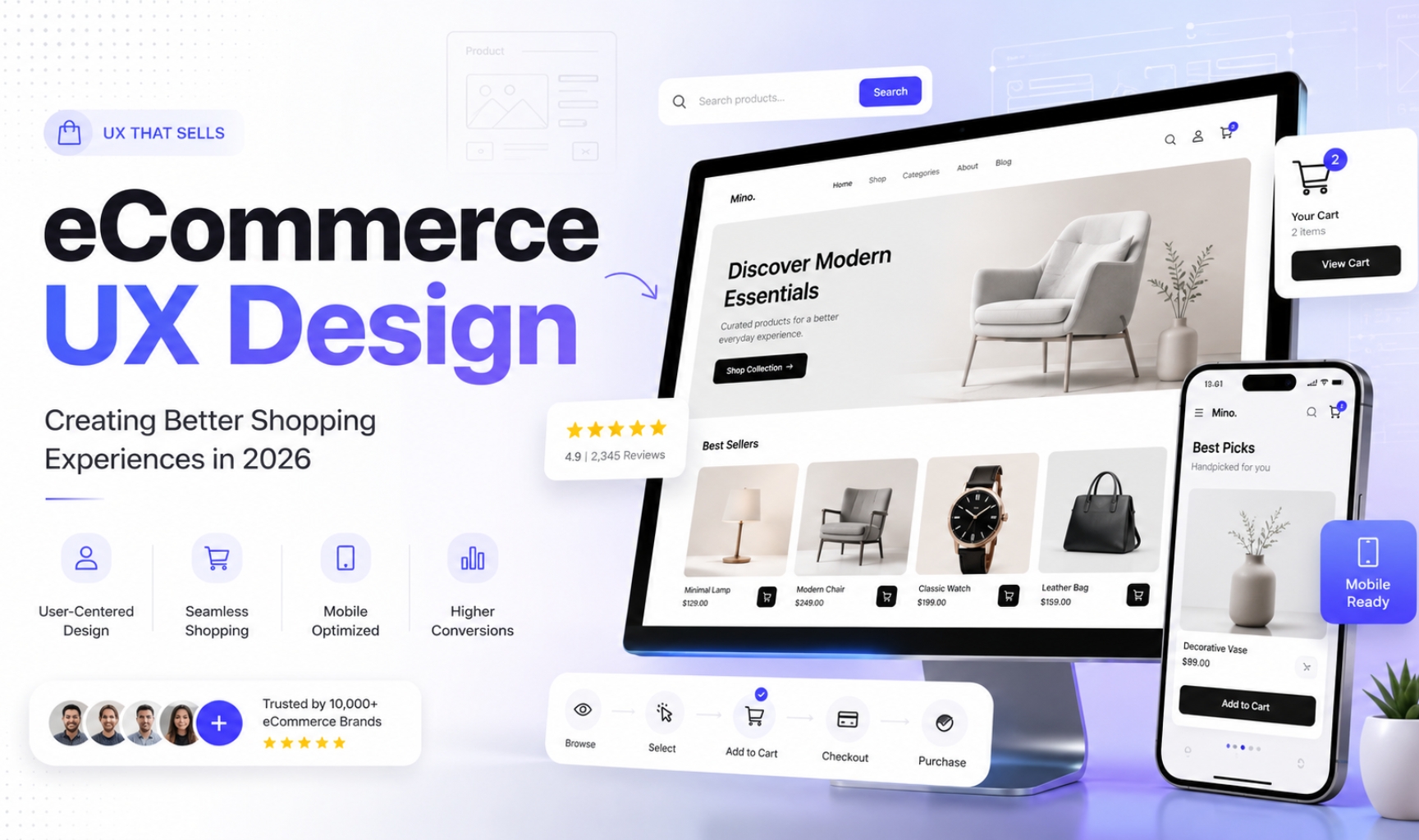
The way people shop online has changed significantly over the last few years. Customers are no longer impressed by websites that simply look modern; they expect online stores to feel easy to use, fast to navigate, and intuitive from the moment they arrive.
That shift is why eCommerce UX Design has become one of the most important parts of building a successful online store.
A strong user experience can improve how customers interact with your brand, how long they stay on your website, and whether they decide to complete a purchase. In many cases, the difference between a high-performing store and an underperforming one comes down to usability rather than products.
In 2026, businesses are focusing less on adding unnecessary visual effects and more on creating experiences that reduce friction and help customers shop comfortably.
What Is eCommerce UX Design?
eCommerce UX Design refers to how users experience an online store while browsing, searching for products, and making purchases.
It includes:
- Navigation and layout
- Mobile usability
- Product page structure
- Checkout flow
- Site speed
- Content organization
The goal of UX design is simple: make the shopping experience feel natural.
Good UX helps customers move through a website without confusion. Instead of making users think harder, it guides them toward decisions more efficiently.
Why UX Matters More Than Ever
Online shoppers have more options than ever before.
If a website feels slow, cluttered, or difficult to navigate, customers can leave and visit another store within seconds. User expectations are also higher now because large eCommerce brands have influenced how people expect websites to function.
Modern consumers value:
- Fast-loading pages
- Clear product organization
- Mobile-friendly browsing
- Simple checkout experiences
- Consistent design
Businesses that invest in eCommerce UX Design often improve customer satisfaction while reducing bounce rates and cart abandonment.
Simplicity Is Becoming a Core Design Strategy
One of the biggest shifts in modern eCommerce design is the move toward simplicity.
Many older websites relied heavily on sliders, animations, and crowded layouts. Today, brands are moving toward cleaner interfaces that help users focus more easily on products and information.
A simple design does not mean a boring design.
It means:
- Better spacing
- Clear typography
- Organized content
- Fewer distractions
Minimal layouts often create a stronger sense of professionalism and trust because users can process information more comfortably.
Mobile Experience Now Shapes the Entire Journey
Mobile commerce continues to grow, and for many businesses, smartphones generate the majority of website traffic.
That means mobile usability can no longer be treated as a secondary consideration.
Strong mobile-focused eCommerce UX Design includes:
- Responsive layouts
- Easy-to-tap buttons
- Simplified navigation
- Fast mobile loading speeds
- Streamlined checkout forms
Customers expect the same smooth experience on mobile devices that they receive on desktops. Stores that fail to provide this often struggle with engagement and conversions.
Navigation Should Feel Effortless
Navigation plays a major role in how users interact with an online store.
Customers should be able to:
- Find products quickly
- Understand categories easily
- Move between pages naturally
Complex menus and disorganized structures create unnecessary friction.
Good navigation focuses on clarity rather than creativity. Clear menus, visible search bars, and logical category structures help users shop with less effort.
In many cases, improving navigation alone can significantly improve the overall user experience.
Product Pages Need Better User Experience
Product pages are often where customers decide whether to buy.
A well-designed product page should provide information clearly without overwhelming the user. Strong product pages usually include:
- High-quality visuals
- Readable descriptions
- Clear pricing
- Visible call-to-action buttons
- Trust-building details
Modern eCommerce UX Design also prioritizes mobile readability and faster product page loading.
When customers feel confident about a product, they are more likely to complete a purchase.
Website Speed Is Part of User Experience
Site speed is often treated as a technical issue, but from a customer perspective, it directly affects usability.
Slow websites create frustration almost immediately.
Modern online stores are focusing on:
- Optimized images
- Lightweight design structures
- Faster hosting environments
- Performance-focused development
A faster website improves both user experience and search visibility. More importantly, it creates a smoother shopping process that feels more reliable to customers.
Trust Signals Influence Buying Decisions
Customers are more cautious online than ever before.
Even if a product looks appealing, users may hesitate if the website does not feel trustworthy.
Good UX design supports trust by including:
- Customer reviews
- Secure payment indicators
- Transparent pricing
- Clear return policies
- Consistent branding
These elements help reduce uncertainty and make customers feel more comfortable purchasing from a store.
Personalization Is Becoming More Common
Many modern e-Commerce stores are creating more personalized experiences for users.
This can include:
- Product recommendations
- Personalized search results
- Recently viewed products
- Customized offers
Personalization helps stores feel more relevant to individual shoppers while improving product discovery.
As AI tools continue to evolve, personalization is becoming a larger part of modern e-commerce UX Design strategies.
The Shift Toward More Human-Centered Design
Another noticeable trend in 2026 is the move toward more human-centered digital experiences.
Many brands are reducing overly corporate or overly automated interfaces and focusing more on authenticity.
This includes:
- Real photography
- Softer visual styles
- Better storytelling
- More relatable branding
Some businesses also explore platforms like creatorstudio99 to study how modern online stores structure layouts and user experiences in ways that feel both visually clean and conversion-focused.
The goal is not just to create functional websites, but experiences that feel more approachable and natural for customers.
Final Thoughts
Good design is no longer only about appearance. In modern eCommerce, usability has become just as important as visuals.
Strong eCommerce UX Design helps businesses:
- Improve customer satisfaction
- Create smoother shopping experiences
- Increase conversions
- Build long-term trust
As online competition continues to grow, businesses that prioritize simplicity, usability, speed, and customer comfort will continue to stand out.
Customers may not always notice good UX directly, but they always notice when it is missing.